Research
Bridging Ancient Medical Wisdom with Modern Scientific Research
Acupuncture and botanical herbal medicine are fundamental components of traditional Chinese medicine, with a history spanning thousands of years. Clinicians have used these therapeutic approaches to treat a wide range of health conditions.
Despite their long history, the biological mechanisms underlying many traditional treatments remain incompletely understood. Historical medical knowledge, differing terminology, and language barriers have complicated efforts to translate traditional clinical experience into modern scientific understanding.
Our research seeks to bridge this gap by integrating traditional medical knowledge, decades of clinical experience, and modern biomedical science.
Understanding Disease Through Pathological States
Diseases may arise from infections, noninfectious conditions, or physical injuries. Although their causes, diagnoses, and clinical manifestations differ, many diseases share underlying pathological processes, including inflammation, cellular injury, impaired immune regulation, and tissue dysfunction.
These shared pathological changes provide an important foundation for our research.
Rather than focusing exclusively on disease names, we investigate the underlying pathological states affecting cells, tissues, and organs.
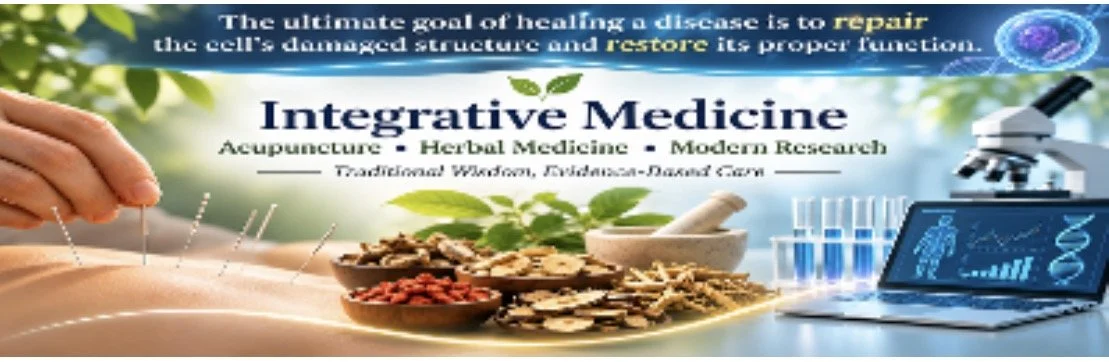
Our central research principle is that restoring damaged cellular structures and their physiological functions is a fundamental goal of healing.
Dynamic Pathology-Based Therapy (DPBT)
Based on extensive clinical experience, we have developed an investigational therapeutic approach known as Dynamic Pathology-Based Therapy (DPBT).
DPBT is based on the principle that the human body possesses natural mechanisms for immune defense, cellular repair, tissue renewal, and physiological regulation.
The immune system recognizes and responds to external threats, including viruses and bacteria, as well as certain abnormal cells arising within the body. Meanwhile, cellular repair and renewal mechanisms help maintain tissue integrity and physiological function.
When these protective and restorative processes become disrupted, pathological changes may develop or persist.
DPBT seeks to address these pathological states through carefully selected acupuncture techniques and/or botanical herbal formulations, aiming to support the body's natural regulatory and recovery processes.
The therapeutic objective is to guide pathological processes toward healthier physiological function.
Acupuncture and Botanical Medicine: Different Tools, One Therapeutic Principle
Acupuncture and botanical herbal medicine are distinct therapeutic modalities with different biological actions. However, within the DPBT framework, they apply a shared therapeutic principle: addressing the patient's underlying pathological state rather than relying solely on a disease's diagnostic name.
Treatment selection considers the patient's clinical presentation, underlying pathological processes, disease progression, and individual physiological condition.
Unlike therapies designed primarily to block a specific receptor or replace a deficient biological substance, DPBT investigates whether acupuncture and botanical interventions can influence broader pathological processes and support endogenous regulatory and repair mechanisms.
These approaches are not substitutes for essential medical treatments, including necessary organ-support therapies, antimicrobial treatments, or emergency care.
From Clinical Observation to Scientific Validation
Our clinical observations have informed the development of DPBT and generated research hypotheses about inflammation regulation, immune responses, cellular recovery, and restored physiological function.
We are evaluating these hypotheses through systematic clinical data collection, biological measurements, and structured research.
Our long-term objective is to better understand how acupuncture and botanical medicine may influence shared pathological processes across different diseases, including conditions that occur simultaneously in the same patient.
Our research vision is simple:
One therapeutic principle. One primary target—the pathological state. One ultimate goal—restoration of physiological function.
Dynamic Pathology-Based Therapy (DPBT) is an investigational framework. Its proposed mechanisms and effectiveness across different conditions require further scientific evaluation.